Concrete built to last decades, not seasons.

Patios, driveways, walkways, and pool decks — poured with proper subbase, reinforcement, and precision finishing by one crew, start to finish.

Why Concrete Fails Early

Most cracked concrete was never the concrete's fault.

Cracking, sinking, and spalling almost always trace back to what happened before the pour — poor subbase compaction, missing reinforcement, or concrete poured too thin for the load it carries. A driveway finished ahead of schedule with a spotless site is what proper prep looks like, not luck.

Cracking or heaving driveway slabs

Spalling or flaking concrete surface

Patio pooling water instead of draining

Uneven walkway settling near the house

Plain gray slab ready for an upgrade

Planning new construction from scratch

What We Pour

Four applications, one standard.

Every pour gets the same subbase prep and reinforcement, regardless of size.

Patios

A properly built patio starts below grade — compacted subbase, correct slope for drainage, and reinforcement sized to how it'll be used.

Finished plain, broom, or paired with our stamped and decorative options for a custom look.

Best for: outdoor living foundations, entertaining spaces

Driveways

Driveways carry more load and see more temperature stress than any other slab on the property — subbase depth and control joint placement matter more here than almost anywhere else.

Built to handle daily vehicle weight without the early cracking that comes from cutting corners on prep.

Best for: full replacements, new construction, widening

Walkways & Sidewalks

Smaller footprint, same standard — proper base and control joints so a walkway doesn't become the first thing that cracks on the property.

Often paired with a driveway or patio project for a consistent look across the whole property.

Best for: entryways, connecting outdoor spaces

Pool Decks

Pool decks need slip-resistant finishing and precise drainage slope away from the pool edge — get either wrong and you've got a standing-water or safety problem.

Available broom-finished or upgraded with stamped and exposed aggregate textures.

Best for: new pool installs, replacing cracked or dated decking
How We Build It

Prep right, pour once.

01

Site & Access Review

Grade, drainage, tear-out, and haul-off assessed so the estimate is realistic from the start.

02

Subbase & Forming

Proper compaction and precise forming — the part that determines whether it lasts.

03

Reinforcement & Pour

Rebar or wire mesh sized to the application, then a clean, organized pour.

04

Finish & Cure

Proper finishing and cure time before the site is turned back over to you.

Recent Concrete Work

Real driveways, real patios.
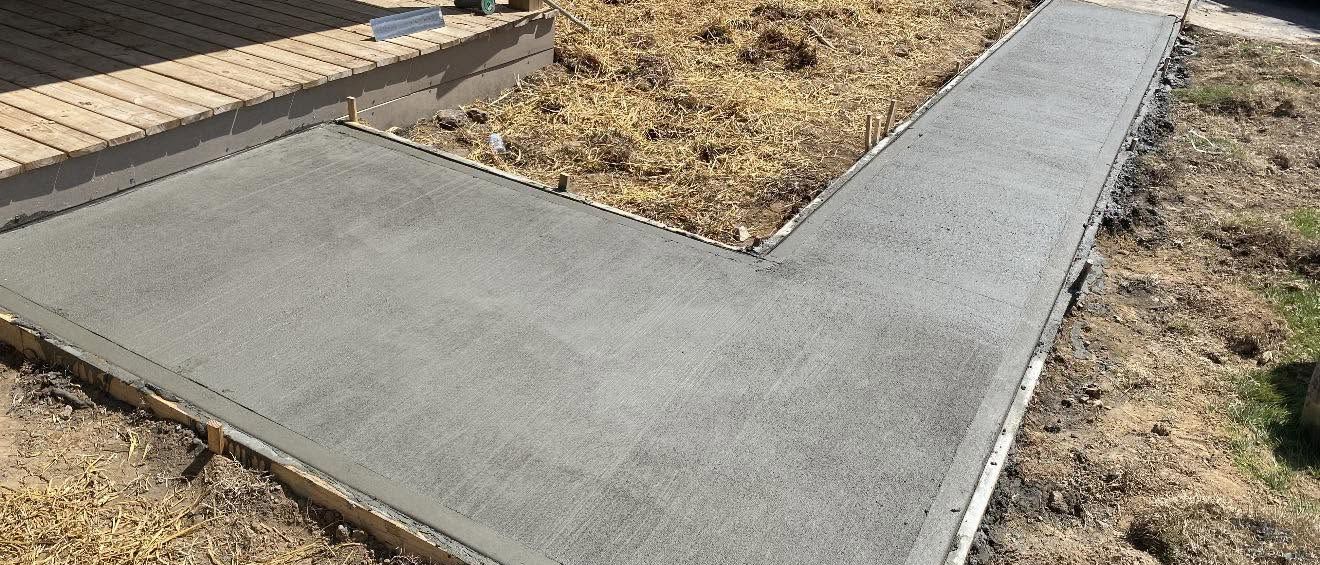
Freshly poured L-shaped concrete driveway and walkway extension
Concrete Driveway Replacement
★★★★★

"New concrete driveway finished ahead of schedule. Price was fair, communication was excellent, and the site was spotless when they left. Will be using M.S. for our patio next spring."

Mike T. — Paducah, KY
Common Questions

Concrete FAQ.

How long does new concrete need to cure?

Concrete reaches enough strength to walk on within 24–48 hours, but full cure takes about 28 days. We'll tell you exactly when it's safe for foot traffic, vehicles, and any follow-on work like sealing.

Can you pour concrete in winter?

Yes, within limits — cold-weather pours need temperature protection and adjusted curing time. We'll tell you directly if conditions on a given date aren't right for a quality pour rather than rush one that won't hold up.

Do you use rebar or wire mesh?

Depends on the application. Driveways and anything carrying vehicle weight typically get rebar; patios and walkways are often fine with wire mesh. We size reinforcement to the actual load, not a one-size-fits-all default.

Does new concrete need to be sealed?

Sealing isn't required but extends the life and appearance of the surface, especially for driveways exposed to deicing salt or patios exposed to constant sun. We can include it or you can handle it later — either way we'll explain the tradeoffs.

What causes concrete to crack?

Almost always inadequate subbase compaction, missing or undersized reinforcement, or control joints spaced too far apart. Some hairline cracking is normal in any concrete; the kind of structural cracking that causes real problems is preventable with proper prep.

Get a real quote, not a guess.

Free on-site estimate — we'll walk the site with you before we put a number on it.

Request Free Estimate
📞 Call Now Free Estimate